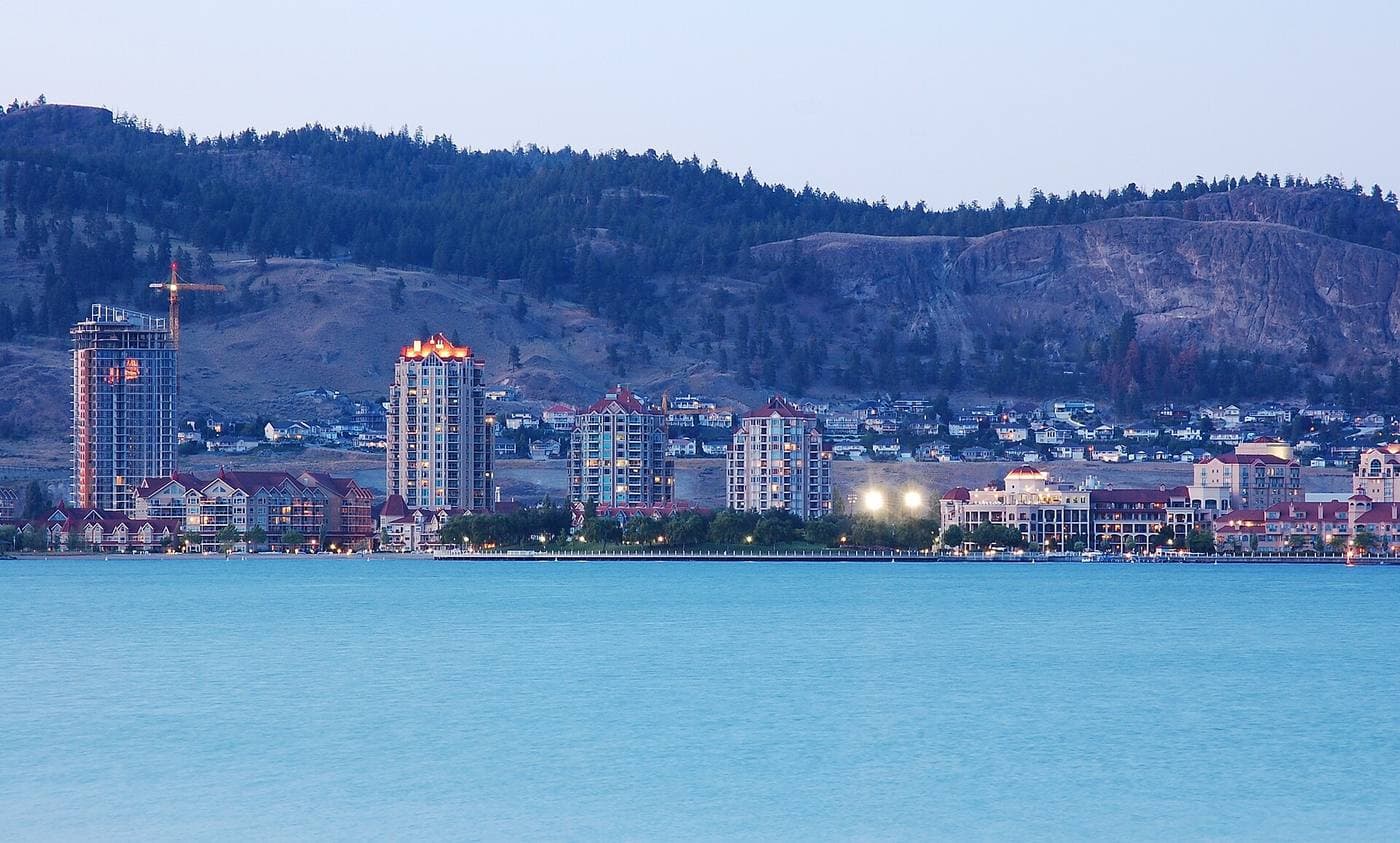

Builders in Kelowna and the Okanagan lowered their asking prices for new homes in August 2026, extending a trend that began late last year. The new housing price index for the region stood at 120.4 in August, down from 122.9 a year earlier and from 120.5 in July. At the same time, construction activity across British Columbia continued to slow, with housing starts running at an annual pace of 229,046 units in August and building permits declining.
The gap between what builders charge for new homes and what resale properties fetch has narrowed in recent months, changing the calculus for buyers who have traditionally paid a premium for new construction. Understanding the difference between these two markets—and the data that tracks them—matters if you're weighing a purchase in the Okanagan this fall.
Key Takeaways
- The new housing price index for Kelowna fell to 120.4 in August 2026, down from 122.9 in August 2025.
- Housing starts across Canada ran at an annual pace of 229,046 units in August, while building permits in British Columbia totalled 7,209,514 dollars in July, down from 7,380,648 a year earlier.
- The index tracks only builders' prices for brand-new homes, not resale properties or the broader market.
- Builders are adjusting prices as construction costs stabilize and buyer demand shifts.
- The narrowing gap between new and resale prices gives buyers more negotiating room in both markets.

What the New Housing Price Index Measures
The new housing price index is not a dollar figure. It tracks the direction and pace of change in what builders charge for newly constructed homes, using a baseline period as the reference point. The index stood at 120.4 in August 2026, meaning builders' prices in Kelowna were slightly higher than the baseline but lower than they were a year ago, when the index registered 122.9.
This index captures only new homes sold by builders before or at completion. It does not include resale properties, which make up the majority of transactions in the Okanagan. The two markets often move in different directions, especially when construction costs, land prices, or builder sentiment shift independently of resale demand.
In August, the index fell by one-tenth of a percentage point from July's reading of 120.5, a modest monthly decline that reflects builders' cautious approach to pricing as they compete for a smaller pool of buyers.
Construction Activity Slows Across the Province
Housing starts across Canada ran at a seasonally adjusted annual pace of 229,046 units in August, down from 229,360 in July and from 244,294 a year earlier. The figure represents the pace at which construction would proceed if August's activity continued for a full year, not the number of homes actually started in the month.
Building permits in British Columbia, which signal future construction, totalled 7,209,514 dollars in July, down from 7,910,707 in June and from 7,380,648 in July 2025. Permits are intentions to build, not shovels in the ground, and the decline suggests builders are pulling back on new projects as they assess demand and manage inventory.
The combination of falling builder prices and slower construction activity points to a market where supply is no longer racing ahead of demand. Builders who overestimated absorption rates in 2024 and early 2025 are now adjusting, either by lowering prices or by delaying new phases until existing inventory clears.
What It Means for Buyers
If you're shopping for a new home in Kelowna, the August data suggests you have more leverage than you did a year ago. Builders are pricing more competitively, and the gap between new construction and resale properties has narrowed. In some neighbourhoods, a new home now costs only marginally more than a comparable resale property, once you account for the lack of immediate renovation needs and the warranty coverage that comes with new construction.
That said, new homes still command a premium in desirable locations, and builders are selective about where they offer incentives. If you're considering a purchase, compare the effective price of a new home—after any builder credits, upgrades, or closing cost assistance—against resale options in the same area. The index tells you the direction of builder pricing, but the actual dollar difference depends on the neighbourhood and the builder's inventory position.
Buyers who prefer resale properties may also benefit indirectly. As new home prices soften, sellers of resale homes face more competition and may be more willing to negotiate, especially if their property requires updates or lacks the features that new construction offers.
What It Means for Sellers
If you're selling a resale home in the Okanagan, the narrowing gap between new and resale prices means you need to position your property carefully. Buyers who might have dismissed new construction as too expensive a year ago are now comparing it seriously against resale options, particularly if your home needs work or lacks modern finishes.
Pricing competitively from the start matters more in this environment. Homes that sit on the market while sellers wait for a buyer willing to pay last year's price often end up selling for less than they would have if priced correctly at the outset. If your home competes directly with new construction—similar size, similar location—consider what a buyer gains by choosing new, and price accordingly.
Sellers of move-up or luxury properties face less direct competition from new builds, since builders have focused recent activity on entry-level and mid-market projects. But even in higher price brackets, buyers are more cautious and more willing to walk away if the value proposition isn't clear.
The Outlook for New Construction
The combination of falling builder prices and declining permit activity suggests the new construction market in Kelowna will remain subdued through the rest of 2026. Builders are unlikely to launch aggressive new phases until they see stronger absorption of existing inventory, and the slower pace of permit issuance means fewer projects will break ground in the coming months.
That doesn't mean new construction will disappear. Demand for well-located, thoughtfully designed homes remains solid, and builders with strong balance sheets will continue to build. But the era of rapid price increases and speculative buying in pre-construction projects has ended, at least for now.
For buyers and sellers alike, the shift means a more balanced market where negotiation matters and where understanding the difference between new and resale pricing can save or cost you thousands of dollars.
If you're navigating the Kelowna market and want insight into how new construction pricing affects your options, Renanza's team can walk you through the data and help you make a decision that fits your timeline and budget.
Sources
- Statistics Canada, New housing price index, monthly, August 2026, https://www150.statcan.gc.ca/t1/tbl1/en/tv.action?pid=1810020501
- Statistics Canada, Building permits by type of structure, July 2026, https://www150.statcan.gc.ca/t1/tbl1/en/tv.action?pid=3410029201
- Canada Mortgage and Housing Corporation (via Statistics Canada), Housing starts, Canada and provinces, August 2026, https://www150.statcan.gc.ca/t1/tbl1/en/tv.action?pid=3410015801
Data last checked: 2026-09-15